Park Hill Opens Its Doors for Sheffield Design Week 2014
Doors Open at Park Hill
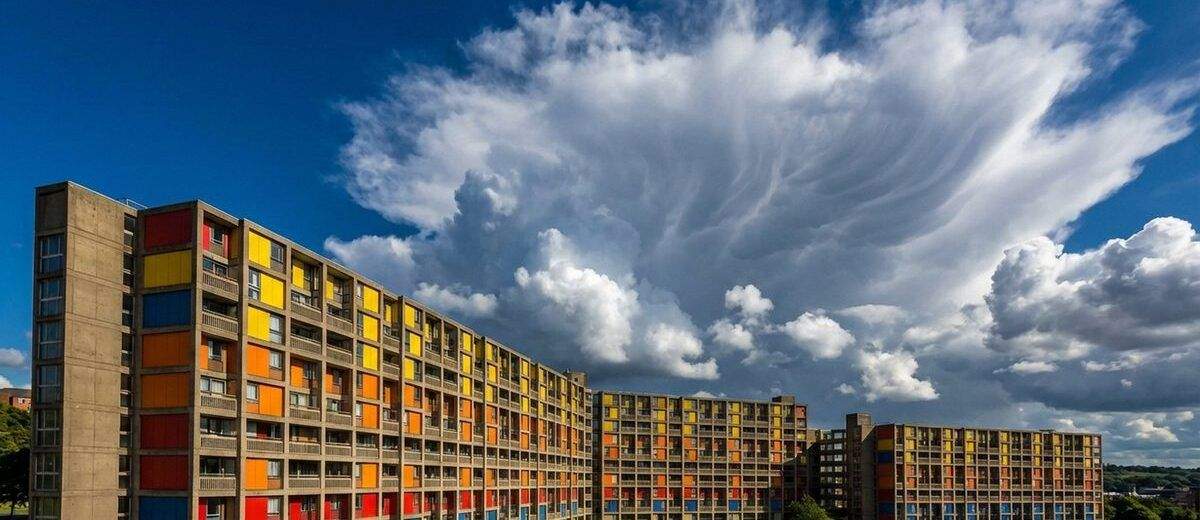
Park Hill is Sheffield’s most famous building and its most controversial. The brutalist housing estate, built between 1957 and 1961, has been the subject of demolition campaigns, heritage listings and a long-running regeneration project that continues to reshape the structure’s identity. During Sheffield Design Week 2015, the Launch Weekend event opened its doors to the public, offering a rare chance to experience the building from the inside.
I arrived early on the Saturday morning and was immediately struck by the scale. Park Hill is a building you think you know from the outside — those long, horizontal concrete decks visible from the train station — but the interior experience is entirely different. The streets in the sky, designed to replicate the social function of the terraced streets they replaced, have a surprising intimacy at walking pace.
Regeneration in Progress
The weekend offered guided tours of both the completed Phase 1 apartments and the unregenerated sections of the building. The contrast was stark and deliberately maintained. New apartments with floor-to-ceiling windows and contemporary finishes sat just metres from original council flat interiors — stripped back, raw, but atmospheric in a way the renovated sections could not match.
Guides from Urban Splash, the regeneration developer, spoke honestly about the challenges of the project — the cost of maintaining the concrete frame, the difficulty of adapting 1960s layouts for contemporary living, the ongoing tension between preservation and modernisation.
Park Hill’s Continuing Story
The Launch Weekend was one of Sheffield Design Week’s most popular events, and for good reason. Park Hill is a building that generates strong feelings, and giving people access to its interior spaces allowed for more nuanced conversation than the view from Sheffield station permits.
The event connected to the Beauty and the Brutal exhibition, which placed Park Hill within the broader context of Sheffield’s brutalist heritage. For those interested in the building’s full story, the walking guide to Sheffield’s brutalist architecture provides additional context and practical visiting information.
