How Sheffield's Industrial Past Continues to Shape Its Creative Future
Steel Runs Through Everything
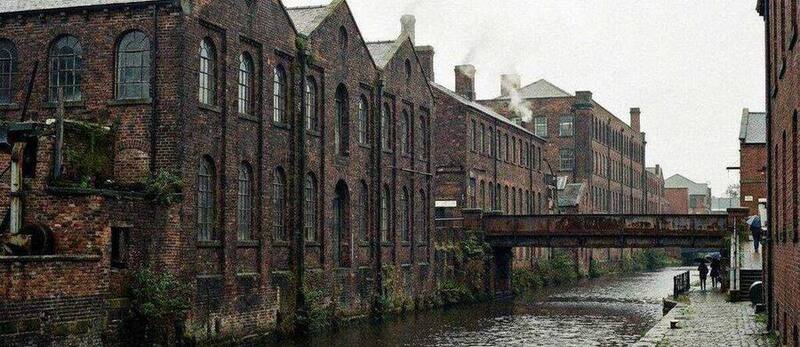
Can a city’s industrial past become its creative future? In Sheffield, the question is not theoretical. Walk through Kelham Island on a weekday morning and you will find designers working in converted grinding shops, breweries occupying former steel mills, and restaurants serving from buildings where cutlery was once forged. The past is not preserved under glass here — it is put to work.
This transformation did not happen by accident. It happened because Sheffield’s industrial buildings proved remarkably adaptable, and because a generation of creative practitioners saw value where developers saw demolition sites.
Kelham Island: The Template
Kelham Island is the most visible example of Sheffield’s industrial reinvention. The area, which takes its name from a man-made island in the River Don, was the centre of Sheffield’s steel and cutlery industries for centuries. By the 1980s, many of its workshops and factories stood empty.
The Kelham Island Museum, established in 1982, was among the first institutions to recognise that Sheffield’s industrial buildings deserved preservation and interpretation. The museum occupies a former generating station and houses the River Don Engine — a twelve-thousand-horsepower steam engine that once powered an armour plate rolling mill. Standing beside it, you understand the scale of what Sheffield once produced.
Around the museum, the area has evolved into one of Sheffield’s most desirable quarters. The Cutlery Works food hall occupies a former cutlery factory. The Fat Cat brewery operates from converted industrial premises. Each conversion retains enough of the original character — the steel beams, the loading doors, the brick walls — to keep the area’s identity legible.
Portland Works: Where Stainless Steel Was Born
Portland Works on Randall Street holds a particular place in Sheffield’s industrial story. It was here, in 1913, that Harry Brearley first applied his discovery of stainless steel to cutlery production. The building is now a Grade II listed shared workspace housing silversmiths, jewellers, printmakers and other craft practitioners.
The conversion of Portland Works was community-led rather than developer-driven, and this shows in the result. The building retains its workshop character — the small rooms, the shared corridors, the sense of making happening behind every door. It is industrial heritage preserved through continued use rather than museum display.
Abbeydale Industrial Hamlet
Further south, Abbeydale Industrial Hamlet offers a complete picture of pre-industrial Sheffield. The site is an eighteenth-century scythe-making works, preserved with its water wheels, forges and grinding hulls intact. It demonstrates the entire production process from raw steel to finished blade, and it does so in a setting that has barely changed in two hundred years.
Abbeydale matters because it shows what Sheffield was before the large-scale industrialisation of the Victorian era. The craft skills on display — forging, grinding, assembling — are the same skills that later scaled up to produce the steel that built railways, bridges and warships.
The Creative Inheritance
Sheffield’s contemporary creative culture owes more to its industrial past than is sometimes acknowledged. The city’s maker spaces carry forward traditions of skilled handwork. Its design studios occupy buildings that were purpose-built for making things. Even the city’s character — direct, unpretentious, suspicious of show — reflects the values of a manufacturing culture.
The Craftworks exhibition during Sheffield Design Week made this connection explicit, bringing contemporary craft practitioners into dialogue with the city’s industrial heritage. Sheffield’s journey from Steel City to Design City is not a break with the past but an evolution of it.
What Sheffield demonstrates is that industrial heritage need not be a burden. Treated with intelligence and respect, it becomes a resource — providing the buildings, the skills and the identity from which a creative economy can grow.
The Living Heritage
What distinguishes Sheffield’s approach to its industrial heritage from many other post-industrial cities is the emphasis on continued use rather than static preservation. Kelham Island is not a theme park. Portland Works is not a museum. These are working spaces where contemporary practitioners engage with historical buildings and, in doing so, keep them alive.
The Shepherd Wheel in Whiteley Woods demonstrates this principle at a smaller scale. The water-powered grinding workshop has been restored and is operated as a working heritage site where visitors can see traditional grinding techniques demonstrated. The wheel still turns, the sparks still fly, and the skill required to hold a blade against a spinning stone is as impressive now as it was two centuries ago.
Sheffield’s industrial heritage also shapes the city’s relationship with materials. The cutlery industry created a culture of material knowledge — an understanding of how metals behave under different conditions, how to work with grain and temper, how to finish a surface. This knowledge persists in the city’s contemporary metalworkers, who bring an inherited material intelligence to their practice that cannot be learned from textbooks alone.
The economic argument for preserving and reusing industrial buildings is increasingly well established. Conversion costs are often lower than new build. The resulting spaces have a character and solidity that new construction rarely matches. And the cultural capital of an industrial building — its story, its authenticity, its connection to place — adds value that extends beyond the purely financial. Sheffield understood this intuitively before the heritage economics literature caught up. The city’s industrial buildings were too useful, too well built and too embedded in local identity to be simply demolished. Instead, they were adapted, reoccupied and put back to work — which is, after all, the most Sheffield thing you can do with a building.
