From Steel City to Design City: Tracing Sheffield's Creative Evolution
Making Has Always Been the Constant
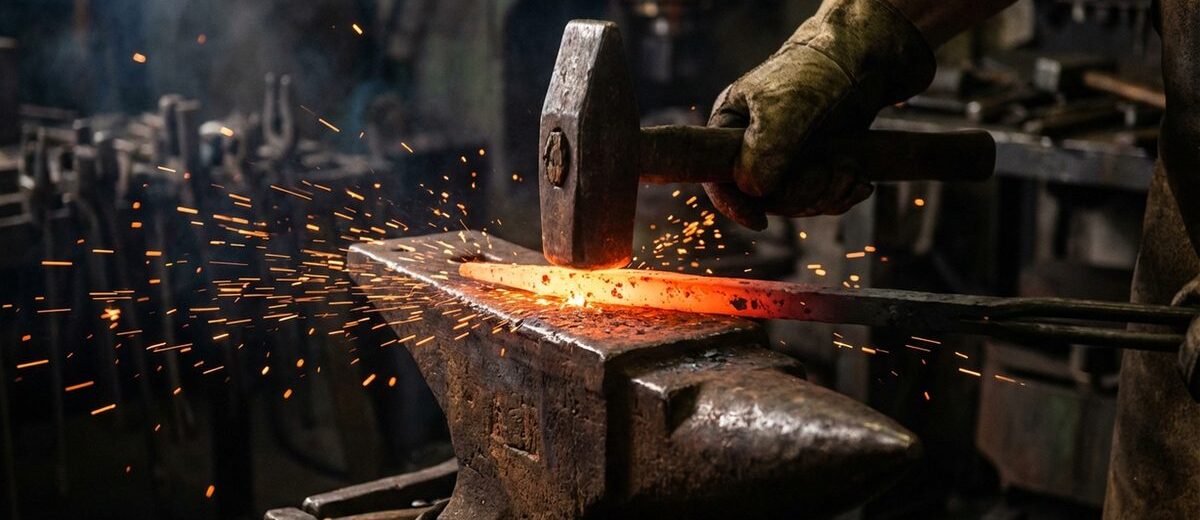
The story of Sheffield’s transformation from industrial powerhouse to creative city is often told as a story of loss and reinvention. Steel declined, culture filled the gap. But that narrative misses something important: Sheffield has always been a design city. The difference is that the things it designs have changed.
When Benjamin Huntsman developed crucible steel in Sheffield in the 1740s, he was solving a design problem — how to produce steel of consistent quality for clock springs. When Harry Brearley discovered stainless steel in 1913, he was addressing a practical challenge in gun barrel manufacture. When David Mellor redesigned British traffic signals, he was applying Sheffield’s making tradition to a new context. The thread connecting these moments is design thinking applied to material problems.
The Industrial Foundation
Sheffield’s industrial character was never simply about mass production. The city specialised in high-quality, skilled metalwork — cutlery, tools, surgical instruments — that required design decisions at every stage. A table knife involved choices about blade geometry, handle proportion, balance and finish. These were design choices, even if nobody called them that.
This culture of considered making created a workforce with an intuitive understanding of materials, processes and quality. When the large steel works closed, those skills did not vanish. They dispersed into smaller workshops, educational institutions and, eventually, into a broader creative economy.
The Transition
The 1980s and 1990s were difficult for Sheffield. The steel industry’s decline was rapid and painful, and the city struggled to articulate a new identity. But even during this period, creative activity was growing. The Designers Republic, founded by Ian Anderson in 1986, demonstrated that Sheffield could produce graphic design of international significance. The city’s music scene — from Cabaret Voltaire to Pulp to the Arctic Monkeys — proved that creativity could emerge from post-industrial landscapes.
The establishment of the Cultural Industries Quarter in the 1980s was a deliberate attempt to channel this creative energy into economic regeneration. Workstation, the Showroom Cinema and Red Tape Studios provided infrastructure for creative practitioners. The approach was pragmatic rather than glamorous — affordable space, basic facilities, minimal bureaucracy.
The Contemporary Landscape
Today, Sheffield’s creative economy encompasses design studios, digital agencies, maker spaces, galleries and educational institutions. The maker spaces at Portland Works and Persistence Works connect directly to the city’s craft tradition. Sheffield Hallam University’s design programmes feed graduates into the local creative economy. The gallery network provides exhibition opportunities.
What distinguishes Sheffield’s creative culture from that of other northern cities is its groundedness. There is relatively little posturing. The work tends to be purposeful, well-made and unpretentious — qualities that would be familiar to the cutlers and steelworkers who preceded today’s designers.
What Comes Next
Sheffield’s creative evolution is ongoing. The city’s affordability relative to London and Manchester continues to attract practitioners who prioritise making over networking. The industrial buildings that house much of the city’s creative activity provide characterful, adaptable space at reasonable rents. And the making culture — the deep assumption that things should be well made — persists.
Sheffield became a design city not by abandoning its industrial identity but by recognising that design was always part of it. The steel may have largely gone, but the making continues.
The question of what comes next for Sheffield’s creative culture is not simply about economics or infrastructure. It is about whether the city can maintain the qualities — affordability, authenticity, community, material intelligence — that have sustained its creative evolution to this point. These qualities are not guaranteed. They can be eroded by rising costs, by generic development, by the kind of culture-led regeneration that prizes visibility over substance.
What gives grounds for optimism is Sheffield’s track record. The city has navigated deindustrialisation, recession and decades of underinvestment without losing its capacity to make things. The Craftworks programme during Sheffield Design Week demonstrated that the tradition is not merely surviving but evolving — finding new materials, new markets and new practitioners while retaining the directness and purposefulness that have always characterised Sheffield’s approach to making.
Cities do not become creative by accident or by committee. They become creative because the conditions are right: affordable space, a critical mass of practitioners, a culture that values making over marketing, and enough distance from dominant centres to allow independent thinking. Sheffield has had these conditions for longer than most, and the evidence suggests that they continue to produce creative work of genuine significance.
