Kelham Island Museum: Exploring Sheffield's Industrial Heritage
Where Sheffield’s Story Is Told in Steel
Kelham Island Museum sits on a man-made island in the River Don, in the heart of what was once Sheffield’s most productive industrial quarter. The museum tells the story of the city’s steel and cutlery industries through objects, machinery and — most memorably — a working steam engine of extraordinary scale.
For anyone interested in how design and industry shaped Sheffield, this is essential visiting. The museum does not romanticise the industrial past, but it does insist that it matters — and the evidence it presents is compelling.
The River Don Engine
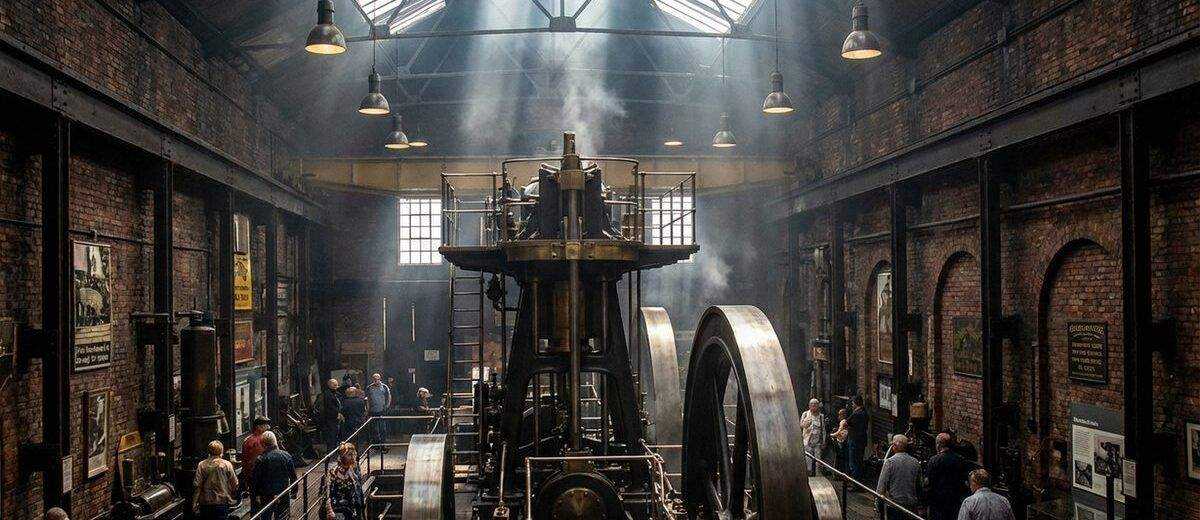
The museum’s centrepiece is the River Don Engine, a twelve-thousand-horsepower steam engine built in 1905 by Davy Brothers of Sheffield. Originally used to power an armour plate rolling mill at Cammell Laird’s Grimesthorpe Works, the engine is one of the most powerful surviving steam engines in the world.
The engine is demonstrated regularly, and watching it run is a visceral experience. The flywheel alone weighs forty tonnes. The pistons move with a smoothness that belies the forces involved. Standing beside it, you understand something about Sheffield’s industrial capacity that no photograph or written description can convey.
The Permanent Galleries
The permanent galleries trace Sheffield’s industrial development from the medieval period to the late twentieth century. The cutlery displays are particularly strong, showing the evolution of knife design from hand-forged blades to industrial production. The David Mellor pieces in the collection demonstrate how industrial design and craft intersected in Sheffield.
The Little Mesters gallery recreates the working conditions of Sheffield’s independent craftsmen — the small-scale operators who rented workshop space and produced specialist items. These figures are central to Sheffield’s industrial story: highly skilled, fiercely independent and responsible for much of the quality that gave Sheffield steel its global reputation.
The Workshop Demonstrations
The museum runs regular demonstrations of traditional metalworking skills. Watching a buffer at work — polishing cutlery on a revolving mop wheel at high speed — is a reminder of the physical skill that underpinned Sheffield’s reputation. These demonstrations connect directly to the contemporary maker culture that still operates in the surrounding streets.
The Building and Setting
The museum occupies a former generating station on Alma Street. The building itself is worth attention — its industrial architecture provides an appropriate setting for the collection. Outside, the mill race that powered Kelham Island’s industries is still visible, and the island setting gives the museum a slightly separated, contemplative quality.
The surrounding Kelham Island area has been transformed in recent years, with breweries, restaurants and creative businesses occupying former industrial premises. A visit to the museum combines naturally with exploration of the wider area.
Visiting
The museum is open Monday to Thursday and Sunday, with Saturday closure. Admission is charged. The River Don Engine is demonstrated on specific days — check the museum’s schedule before visiting if this is a priority. Allow at least ninety minutes for a thorough visit, longer if the engine is running.
The museum is a fifteen-minute walk from the city centre, or a short bus ride. The route from Tudor Square follows the River Don and passes through some of Sheffield’s most historically significant industrial streets.
The Wider Kelham Island Area
A visit to the museum combines naturally with exploration of the wider Kelham Island area, which has been transformed from derelict industrial quarter to one of Sheffield’s most vibrant neighbourhoods. The Cutlery Works food hall, housed in a converted factory, provides lunch options alongside independent food traders. The Fat Cat brewery operates from converted industrial premises nearby. Several bars and restaurants occupy former workshops and warehouses, retaining enough industrial character to keep the area’s identity legible.
For those interested in contemporary making, the walk from the museum to Portland Works takes about ten minutes and passes through streets where Sheffield’s industrial and creative economies overlap. The contrast between the museum’s preserved industrial processes and the contemporary craft practices at Portland Works illustrates the continuity that defines Sheffield’s relationship with making.
The area’s transformation has not been without tension. Rising property values, driven by the conversion of industrial buildings to residential and hospitality use, have displaced some of the independent businesses that gave the area its initial appeal. The balance between preservation and development — maintaining the area’s character while allowing it to evolve — is an ongoing negotiation that reflects broader debates about urban regeneration across Sheffield.
Kelham Island Museum stands at the centre of this conversation, a reminder that the area’s value lies not just in its fashionable restaurants and apartments but in its deep connection to Sheffield’s industrial story. The museum ensures that this story remains visible, accessible and properly told — even as the neighbourhood around it continues to change.
