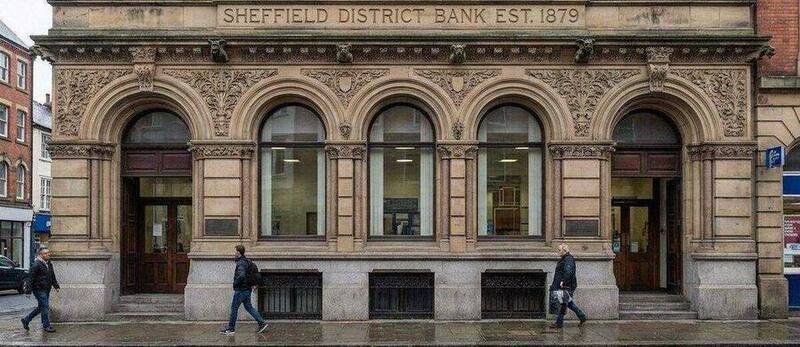
Listed Buildings in Sheffield: A Heritage Architecture Guide
More Heritage Than You Might Think
Sheffield has over 1,200 listed buildings. That figure surprises most people, even those who live here. The city’s industrial reputation tends to overshadow its architectural heritage, yet the listing register tells a different story — one of medieval churches, Georgian townhouses, Victorian civic ambition and twentieth-century experimentation.
This guide covers the most architecturally significant listed buildings across the city, from Grade I landmarks to lesser-known Grade II gems that reward a detour.
Grade I: The Exceptional
Sheffield has a small number of Grade I listed buildings, each representing architecture of outstanding national importance. The Cathedral Church of St Peter and St Paul, with its medieval nave and perpendicular Gothic tower, is the oldest. Parts of the building date to the early fifteenth century, though the extensions by Charles Nicholson in the 1930s and 1960s give the Cathedral a layered quality that reflects centuries of Sheffield’s development.
Bishops’ House in Meersbrook Park is a timber-framed building dating from around 1500, making it one of the oldest surviving domestic buildings in Sheffield. Its exposed oak frame and herringbone brickwork are best appreciated from the south garden, where the building’s medieval proportions become fully apparent.
Grade II*: The Outstanding
Park Hill received its Grade II* listing in 1998, making it the largest listed building in Europe at the time. The decision was controversial — many residents of Sheffield questioned whether a concrete housing estate deserved the same level of protection as a medieval church. The listing recognised Park Hill’s architectural significance as a pioneering example of streets-in-the-sky social housing.
The Cutlers’ Hall on Church Street, rebuilt in 1832, represents Sheffield’s most confident civic architecture. The building’s Corinthian columns and grand banqueting hall speak to the wealth and influence of the Company of Cutlers, the trade guild that shaped the city’s economic identity for centuries.
Sheffield Town Hall, designed by E. W. Mountford and opened in 1897, is another Grade II* landmark. Its tower is one of the city’s most recognisable features, and the interior — particularly the marble-lined entrance hall and the Council Chamber — demonstrates civic architecture at its most ambitious.
Grade II: The Breadth of Heritage
The majority of Sheffield’s listed buildings carry Grade II designation, and it is here that the true breadth of the city’s heritage becomes apparent. The industrial buildings of Kelham Island — including the former premises of numerous cutlery and steel firms — are listed not for architectural grandeur but for their historical significance as evidence of Sheffield’s industrial character.
The residential listings are equally revealing. Endcliffe Hall, Kenwood Hall and Tapton Hall represent the Victorian industrialists’ taste for substantial suburban houses, while the Gleadless Valley housing estate — listed in 2013 — demonstrates post-war social housing at its most considered.
Churches account for a significant proportion of the Grade II listings. St Mark’s Broomhill, St Mary’s Bramall Lane and the former Wesley College Chapel each demonstrate different approaches to ecclesiastical architecture, from Gothic Revival to Arts and Crafts.
Industrial Heritage Listings
Sheffield’s industrial listings set it apart from most English cities. The Abbeydale Industrial Hamlet, a complete eighteenth-century scythe-making works, is listed as a Scheduled Monument — a designation usually reserved for archaeological sites. The buildings at Portland Works, where stainless steel cutlery was first produced, are listed Grade II and now function as shared maker studios and workshops.
The Shepherd Wheel in Whiteley Woods and the Kelham Island Industrial Museum both contain listed machinery as well as listed buildings, recognising that Sheffield’s heritage is as much about process as it is about architecture.
Finding the Listed Buildings
Many of Sheffield’s listed buildings are concentrated in the city centre and the inner suburbs, but others require more effort to find. The rural western edge of the city, towards the Peak District, contains listed farmhouses and barns that predate Sheffield’s industrial expansion. The brutalist walking guide covers the twentieth-century additions to the register.
Historic England’s listing database provides full details of every listed building in Sheffield, including descriptions and photographs. For those who prefer to explore on foot, the city centre circuit — from the Cathedral to the Town Hall, through Tudor Square to the Cutlers’ Hall — covers a remarkable concentration of heritage in a compact area.
Conservation and Change
Listing protects buildings from unauthorised alteration or demolition, but it does not freeze them in time. Many of Sheffield’s listed buildings have been sensitively adapted for contemporary use. The Lyceum Theatre was restored and reopened after two decades of closure. Portland Works was converted from abandoned factory to thriving maker space. The Cutlers’ Hall continues to function as the headquarters of the Company of Cutlers while hosting public events and exhibitions.
The challenge for Sheffield’s listed buildings is maintaining them in a city where resources are constrained. Heritage maintenance is expensive, and not all of Sheffield’s listed buildings receive the investment they deserve. Some churches are struggling with declining congregations and rising repair costs. Some industrial buildings remain vacant, their listing protecting them from demolition but not from the slower deterioration of neglect.
The Heritage at Risk register, maintained by Historic England, includes a number of Sheffield buildings. These represent the most urgent conservation challenges in the city — structures where intervention is needed to prevent irreversible loss. Supporting these buildings, through public funding, charitable trusts or sympathetic private development, is essential to maintaining the breadth of Sheffield’s architectural heritage.
Understanding Sheffield through its listed buildings reveals a city of greater architectural ambition and variety than its industrial reputation might suggest. From medieval timber framing to post-war concrete, the listings register tells the story of a city that has been building, adapting and occasionally demolishing for over six hundred years. Each listed building is a chapter in that story, and together they form a narrative of civic aspiration that continues to unfold.
