Urban Regeneration in Sheffield: From Castlegate to the Moor
A City Rewriting Itself
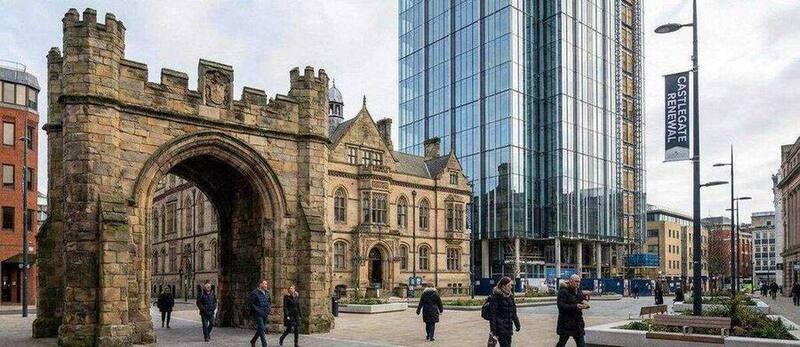
Sheffield is undergoing a period of urban regeneration that is reshaping the city centre more fundamentally than anything since the post-war rebuilding. From the long-neglected Castlegate area to the commercial spine of the Moor, design decisions being made now will define how Sheffield looks and functions for decades to come.
The scale of change is significant. Castlegate, the Heart of the City II scheme, the retail transformation of the Moor, and the ongoing development around the railway station represent billions of pounds of investment. But the more interesting question is not how much money is being spent but how well it is being spent.
Castlegate: Sheffield’s Oldest Quarter Renewed
Castlegate occupies the site where Sheffield began. The area around the former Castle Market — demolished in 2015 — sits at the confluence of the rivers Sheaf and Don, where Sheffield’s medieval castle once stood. For decades, this historically significant site has been underused, defined more by car parks and empty lots than by the public life it deserves.
The Castlegate regeneration plan aims to reconnect the area with the river and create a mixed-use quarter that acknowledges both the site’s history and its potential. Early interventions, including the Castle Gateway community garden, have demonstrated that public engagement and incremental improvement can prepare the ground for larger development.
The archaeological discoveries made during the Castle Market demolition — including remains of Sheffield Castle — have added complexity and significance to the regeneration plans. How the city responds to this heritage will say much about Sheffield’s values.
Heart of the City
The Heart of the City schemes have transformed Sheffield’s commercial centre over two decades. The first phase, completed in the early 2000s, gave the city the Peace Gardens, the Millennium Gallery and the Winter Gardens — a cluster of public spaces and cultural buildings that fundamentally changed how the centre felt.
The second phase, currently under construction, extends the ambition with new office buildings, a food hall, and improved connections between the railway station and the retail core. The architectural quality of the new buildings varies, but the urban design principle — creating active street frontages and permeable blocks — is sound.
The Moor: Retail Reinvented
The Moor has been Sheffield’s primary shopping street for over a century, but its character has changed dramatically in recent years. The Moor Market, completed in 2013, replaced the much-loved Castle Market and Sheaf Market with a contemporary building that divides opinion. Its timber-clad exterior and generous interior spaces represent a significant investment in traditional market retail at a time when many cities are abandoning it.
Further along the street, new residential and mixed-use developments are changing the Moor’s profile from purely retail to a more diverse urban quarter. The challenge — as in every British city — is maintaining character and affordability while attracting investment.
The Station Quarter
Sheffield station and its immediate surroundings represent the next frontier of city centre regeneration. Plans for the station area include new public spaces, commercial development and improved connections to the city centre. The success of this scheme matters not just for Sheffield but for the city’s relationship with the wider region.
The station itself, with its 1905 facade and 1960s concourse, embodies the same layering of eras that characterises much of Sheffield’s built environment. How the regeneration responds to this existing fabric will determine whether the result feels authentically Sheffield or generically contemporary.
Design as Civic Ambition
Sheffield’s regeneration programme is ultimately a design question. The Cultural Quarter demonstrates what happens when public buildings are designed with ambition and care. The challenge is extending that quality to commercial development, housing and public realm across the city centre.
The Love Architecture events during Sheffield Design Week consistently argued that good design is not a luxury but a civic necessity. As the city continues to rebuild, that argument has never been more relevant.
Lessons from Other Cities
Sheffield’s regeneration can be usefully compared with similar programmes in other northern English cities. Manchester’s approach has been commercially driven and architecturally bold, producing landmark buildings but also significant displacement. Leeds has focused on its financial services sector, creating a glass-and-steel city centre that sometimes feels detached from the city’s industrial character. Liverpool’s regeneration has been heritage-led, leveraging World Heritage status into cultural tourism.
Sheffield’s approach has been characteristically pragmatic — neither as commercially aggressive as Manchester nor as heritage-focused as Liverpool. The mix of cultural investment (the Peace Gardens, the Winter Gardens, the galleries), commercial development (Heart of the City) and community-led initiatives (Castlegate) reflects a city that is trying to balance multiple priorities rather than pursuing a single regeneration narrative.
The risk, as with any regeneration programme, is that improved public realm and new development increase land values to the point where the creative practitioners and independent businesses that make the city interesting can no longer afford to stay. Sheffield’s relatively low cost base has been a significant factor in sustaining its creative economy. If regeneration erodes that affordability without creating genuine economic opportunities for existing communities, the result will be a shinier but less interesting city.
The best regeneration projects in Sheffield have been those that engaged with existing communities and built on existing strengths. The Cultural Quarter works because it serves a genuine public need for cultural space. Kelham Island works because it retained enough of its industrial character to attract creative tenants who valued authenticity. The test for Castlegate and the station quarter will be whether they can achieve the same balance — creating new value without destroying what already makes Sheffield worth caring about.
